DIY pump track construction
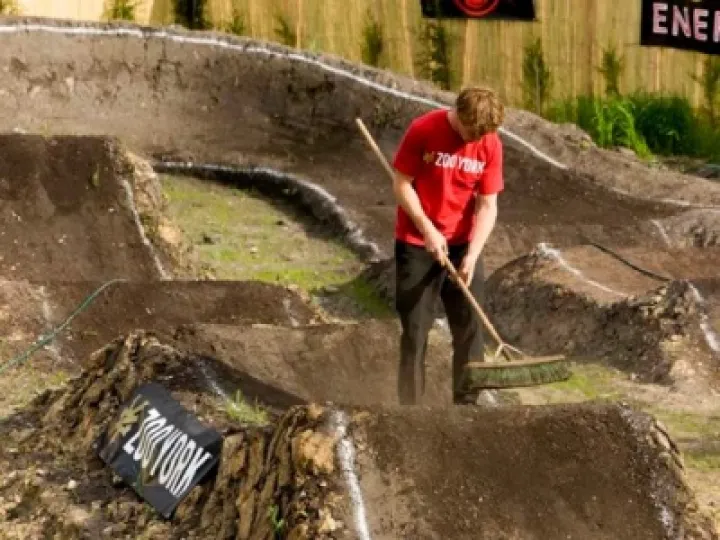
Many BMX riders have daydreamed about having a practice pump track built outside their door or in the backyard. Pump tracks are not just great fun for beginners; they can help even the pros to hone their BMX bike track skills.
Clark & Kent Contractors are the acknowledged experts in pump track building, having completed scores of projects across the UK, from small-budget pump track builds to major circuits.
Former BMX world champion Marco Dell'isola called in Clark & Kent to make his private backyard pump track in Stoke-on-Trent. Clark & Kent even have their own backyard BMX pump track with jumps, rollers and berms that test the skills of even the top BMX racers.
If you want a professional pump track built, call in experts like Clark & Kent. They design and develop some of the best pump tracks in the country for a lot less than you might think.
With just a small space, some shovels, wheelbarrows, and a few fit friends, incredible things can be done.
Pump tracks are so simple
The idea of a BMX pump track is straightforward: it requires a few berms, rollers, and jumps laid out so a BMX rider can 'pump' the bike around them without using pedal power.
Of course, it helps to rent a few earth-shifting tools such as a mini-digger and an earth compactor, but even with just a few essential hand tools and some wheelbarrows, it's possible to build your backyard pump track for very little money.
Even the smallest pump track can be demanding and fun for riders, provided it generates momentum. So, the planning stage is one of the most important.
It's not just a matter of avoiding power cables, water pipes, and similar infrastructure; sketching out the course is also a good idea. The initial pump track design should avoid flat spots, tree roots, rocks, and similar hazards, but other factors should also be considered.
Get the lie of the land
Each part of the track needs to bank up, down or sideways to ensure the rider can keep the momentum going, so it's essential to gauge the lie of the land and make the most of what you've got.
While the pump track will evolve as the building proceeds, a little planning at the start can avoid tears and heartache later.
It's a good idea to mark out the course at the beginning, taking advantage of any natural bumps and hollows, and while you do that, consider drainage so you don't end up with a backyard pond every time it rains.
The first digging job is to rough out the general track layout. The rollers and berms must take shape before you begin packing them down.
Working after a dry spell is much better, especially if the soil is heavy clay. Rainfall will not only make each shovel sticky but also increase its weight, making the work much harder.
The track starts to take shape
Once the general track is roughed out, it's time to develop the details. Rake over the soil and reshape when necessary. The design is unlikely to be perfect the first time around, so don't be shy about making changes.
Roller placement is crucial as BMX riders need momentum to get up and around steep berms. Place rollers on each side of the berms so bikers can pump up the speed.
Straight sections also require regular rollers to increase bike speed. Creating a camber on straights also helps to power the pump action.
Even at the early pump track construction stage, getting on a BMX bike can help you try things out. Decisions on the tightness of berms and the height of rollers in the early stages can save a lot of heartaches (and muscle aches later on).
Pack the dirt down
Once the track is in shape, it's time to compact the dirt. This is where the work gets hard, but it must be done well to avoid surface ruts later. If you hire just one piece of equipment, make it one that can pack the earth.
It's also a great idea to sow grass seed on the raised surface off the track, as the grass will hold the soil together. Don't try to ride the route too soon after finishing your pump track build.
A few rides to finalise features are OK, but it's a good idea to let the soil 'settle' and harden first.
Reaping the rewards
When the track is ready, expect a high volume of phone calls. All those friends who helped will want to test out the new circuit.
It can be great fun to build your BMX pump track, and it provides great satisfaction despite all the hard work. It helps cement friendships and provides a terrific BMK bike resource outside your back door.
More on track design
Setting racetrack standards
Track building guidelines
Pump track design
Planning for a pump track
For help with your BMX project, talk to Clark & Kent , specialist builders of BMX tracks and skateparks.
Contact Us
OFFICE
01630 672329
office@clarkkentcontractors.com
Endorsements