Setting the standard for BMX tracks
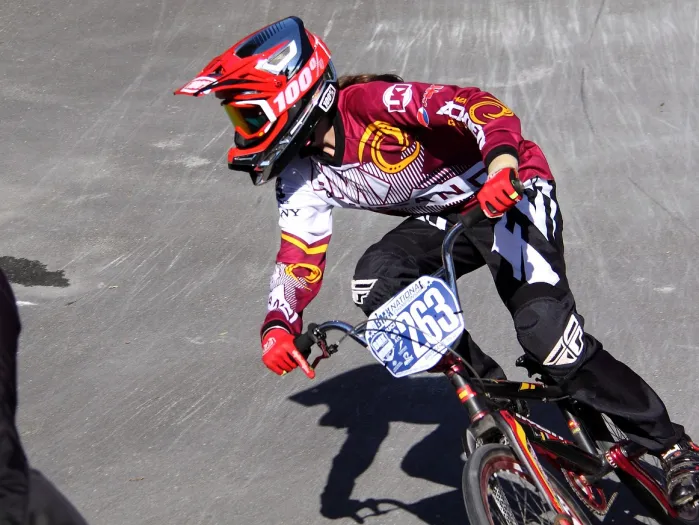
Since BMX racing began in the US in the 1960s, it has become a popular international sport for all ages.
It is now even featured in the Olympic Games. BMX bike racing is also a young, rapidly developing sport, so it was inevitable that international standards had to be set.
As part of the move to establish widely recognised guidelines, Union Cycliste Internationale drew up strict standards for BMX track construction.
Clark & Kent Contractors were pleased and proud to be asked to help develop the guidelines that now allow BMX track builders worldwide to construct BMX race tracks to UCI's highest quality standards.
The UCI technical guidelines ensure that BMX track builders have clearly defined parameters from which to work when they build a new BMX facility.
Clark & Kent used these guidelines when building the BMX track for the London 2012 Olympic Games, thereby helping cement BMX's position as an international cycling sport.
Building a quality track
BMX track builders seeking to construct circuits to UCI standards must now pass rigorous tests to obtain certification, and once they do, they know they have a high-quality BMX track.
It's not UCL's job to certify or approve anything other than the BMX track itself. However, the guidelines do cover areas that lie within two metres of the side of the riding surface, as this is considered a relevant safety issue for BMX riders.
The guidelines specify the minimum and maximum widths for BMX track layouts and the permissible alignment of start ramps, particularly when 5-metre and 8-metre start ramps merge into a single straight.
They set out the overall elevation of the BMX track from the start gate to the finish line, along with the measurement of straights and berms. The minimum distances required to give a proper flow at all track points are of particular concern.
Regulations govern the design
Critical measurements in track design include the distance from the bottom of the start hill to the foot of the first jump, and the distance to the peak of the first jump after the exit of the first turn.
Particular attention is paid to starting ramps for various levels of competition, including Olympic Games BMX, UCI BMX World Championships, UCI BMX Supercross World Cup, and Continental Championships.
Regulations governing start gates, mainly electronically controlled gates with coloured starting lights and voice boxes, are even more detailed to ensure all riders get a good start to the BMX race.
Proper design standards
The rules governing BMX track building also highlight the proper design of straights, notably the first straight, where every rider must have an equal opportunity to make the front, no matter where they start.
The first straight is often the most demanding section of the BMX track, so safety is a significant consideration. Jumps on the second straight are often larger to test riders exiting the first turn at high speed.
In contrast, the jumps in the third straight usually present greater technical challenges, with combinations of characteristics that fully test the riders' skills.
The finishing straight usually combines pedalling and pumping, so although jumps and rollers are more straightforward, the track still tests technique right up to the finish line.
Quality benchmarks must be met
The UCI BMX Track Certificate is a quality label for BMX tracks, confirming that the track meets all UCI quality standards.
Certificates are valid for two years, and an officially appointed track inspector must inspect the BMX race track to ensure it remains up to standard.
So track quality must be permanently maintained to ensure standards do not slip in this ever-growing sport.
More on track design
Pump track design
Building BMX tracks
BMX track guidelines
For help with your BMX project, talk to Clark & Kent , specialist builders of BMX tracks and skateparks.
Contact Us
OFFICE
01630 672329
office@clarkkentcontractors.com
Endorsements