Skatepark building tips and advice
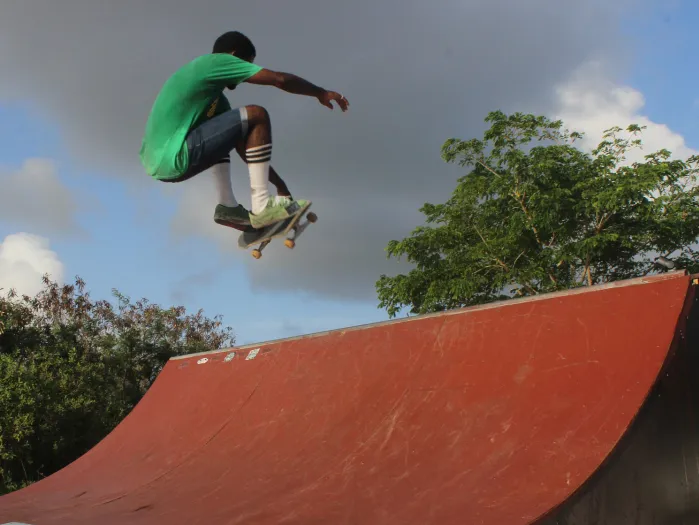
Skate parks have become increasingly popular and appeal to a broad cross-section of young people. Building a skatepark is now considered a relatively cheap way to provide a community facility highly valued by successive generations.
Skateboarding appeals to younger generations, and purpose-built facilities have proliferated, from urban estates to university campuses. It is an athletic sport that can be highly challenging, and many communities have decided it is worth providing a safe place to skate.
A skatepark can draw youngsters away from their computer screens and into a sport that builds confidence, improves health, and offers demanding challenges.
Communities looking to make a skatepark face challenges. Professional skatepark builders Clark & Kent can advise on planning, design, construction and maintenance.
Planning a community skatepark
Community support, location and funding are the key elements in planning to build a skateboarding facility.
The first step is to research the current amenities in your area and determine whether there is any provision for BMX riding, skateboarding, or rollerblading.
If there is, operators could provide helpful information on developing a skatepark. If not, it is still worth checking if any similar projects have failed in previous years.
It is well worth speaking with local schools to assess demand and consulting local youth or sports development officials in the area.
If there is enough support for the project, launching an action group to plan events to publicise it is often helpful. The group can build a social media presence and organise publicity campaigns.
And it's not just youngsters who should be invited to join a skatepark construction project. Parents, teachers, youth leaders and local councillors can also be encouraged to get on board to ensure the scheme has a broad community appeal.
Finding a skatepark location
Once there is a groundswell of support for your skateboard project, you should approach your local council for help finding a suitable skatepark building site. The actual numbers involved and the available funding will often determine the project's size.
When getting clearance to build a new skateboarding facility, the local council's planning department is usually the first port of call. Councils may also provide information on schools and youth clubs in the area, planning permissions in the pipeline, and whether a planning application is likely to succeed.
Depending on the project's size and scale, you may need to consider road access, transport links, parking provision, and related factors.
You will also need to consider the proposed site, the nature of the soil, drainage and watercourses, and former land use. This is especially important if the site is a brownfield with prior industrial use.
The wise will also tackle relevant issues such as toilet provision, litter management, power supply, signage and public amenities. Do not forget to contact the local police to learn about any issues they may have.
Funding a new skatepark
New skateparks are not cheap, but they are also not too expensive to build. When it comes to funding, it may be best to consult experts in skatepark construction, such as Clark & Kent Contractors.
They have extensive experience speaking to community groups, local councils, police, building inspectors and even fundraisers. They may be able to provide useful advice on launching a new skatepark campaign.
Funding will depend primarily on the project's size and scope, which in turn are dictated by the budget.
Determine how much funding might be available from the local council, sports development organisations and other public bodies.
Many will match community funding on a pound-for-pound basis, while cash may also be available through grant aid for land use.
National Lottery funding
There may be grants for community projects, sports development and, of course, the National Lottery.
Most Lottery funding is to groups with a governing body and documents such as a constitution, trust deed, memorandum and articles of association. They offer helpful advice on funding applications here.
The site details award programmes for such schemes as local community projects (up to £10,000), community sports assets (up to £150,000), sport development grants (up to £25,000) and small sports grants (up to £10,000) – there are many more.
Cash from your local community
The most important thing is raising cash from the local community, and you may need help organising fundraising activities and promoting the project. Another useful way to reduce the cost of a skatepark is to secure donated construction materials for the project. Local firms seeking the community's goodwill will often supply concrete, wood, and equipment.
Skatepark design and construction
Building a skatepark requires extensive design and construction expertise, so it is best to consult companies with proven experience in the field, such as Clark & Kent Contractors.
However, it can also be helpful to visit other skateparks to see their features and facilities. This can help you determine which schemes have proven most successful and which pitfalls have been uncovered by those who have embarked on similar projects.
Drawing up professional plans before construction contracts are signed and work gets underway is crucial. As many community skateboard schemes operate on tight budgets and timeframes, there must be no contractual delays.
Skatepark and BMX track building contractors, such as Clark and Kent, will work closely with community groups and other interested parties to develop designs based on the community brief, land availability, site access, and facilities.
Cost of building a skatepark
The cost of a new skatepark is impossible to determine without a design and build plan in place. Some skatepark features can cost more to construct than others – overhangs, cradles and pipes will cost more to build than simple ledges and planks.
One element often overlooked in skatepark costing is drainage. Skateboarders will not want to splash through pools of water.
Skateparks built into a broader park development can be substantially cheaper than standalone projects. Additional provisions may be required for associated facilities, such as fencing, seating, and landscaping.
However, in any cost analysis, it is essential to include the costs of annual upkeep and maintenance.
More on skateparks
Skatepark benefits
Skatepark language
Skatepark maintenance
For help with your skatepark project, talk to Clark & Kent , specialist builders of BMX tracks and skateparks.
Contact Us
OFFICE
01630 672329
office@clarkkentcontractors.com
Endorsements